Nowe Szkoty

Gdańsk Scottish Studies Research Group


Leave a comment

Scotland in Europe/Europe in Scotland

Sco­tland in Eu­rope /​Eu­rope in Scotland

Links – Dia­lo­gues – Analogies

Edited by Aniela Ko­rze­niowska and Iza­bela Szymańska

szkoci_euroOver the cen­tu­ries the links be­tween Sco­tland and Eu­rope, not to men­tion the much wider world beyond the Eu­ro­pean con­ti­nent, have had a va­ried hi­story, with Scots emi­gra­ting to all cor­ners of the globe and ma­king a si­gni­fi­cant im­pact on the co­un­tries in which they have set­tled. At the same time, Scots at home, with their in­te­rest in the hu­ma­ni­ties and science and what lies beyond their own bor­ders have given the world a great deal in di­sco­ve­ries, le­ar­ning, cul­ture and the arts, at the same time al­ways being ready to learn, borrow from others, and take ad­van­tage of what could bro­aden their own ho­ri­zons. The Scots in cer­tain pe­riods in the past formed a very si­gni­fi­cant pre­sence out­side their own home co­untry, whe­reas in Sco­tland, edu­ca­tion, cul­ture and the arts de­ve­loped and expanded also thanks to what was in con­stant flux just over their own border as well as fur­ther afield, in Eu­rope par­ti­cu­larly. Re­la­tions be­tween the Scots and the Eu­ro­pean con­ti­nent have al­ways in­ter­woven. The latter has al­ways been a vi­sible pre­sence in Sco­tland whe­reas the Eu­ro­peans have also never been in­dif­fe­rent to the Scots. [from In­tro­duc­tion]

Table of Contents

Aniela Ko­rze­niowska, Iza­bela Szy­mańska

In­tro­duc­tion: Sco­tland and Eu­rope Interwoven

Part I. Sco­tland in Europe

Paweł Han­czewski

Sco­tland in Eu­ro­pean Politics

Wal­demar Ko­walski

Sco­tland, the Scot­tish Dia­spora, and the Wider World in Re­cent Historiography

Ka­ta­rzyna Kło­sińska

The Suc­ces­sors of Flo­rence Ni­gh­tin­gale. Scot­tish Women on the World War I We­stern Front

Petra Jo­hana Pon­ca­rová

A Tale of a City: Edwin Muir and Prague

J. Der­rick McC­lure

Ap­pro­aches to Trans­la­tion in Iain Galbraith’s Be­redter Norden

Part II. Sco­tland in Poland

Marta Crickmar

Scro­oges and Smug­glers – a Potted Hi­story of the Scot­tish Pre­sence in Poland

Jo­anna Ko­pa­czyk

Scot­tish Pa­pers in Early Mo­dern Po­land: a New Re­so­urce for Hi­sto­rical Linguists

Ka­ta­rzyna Gmerek

Sco­tland in the Eyes of Two Po­lish Lady Tra­vel­lers (1790 and 1858)

Barry Keane

Poland’s First Stage Ad­ap­ta­tions of Ar­thur Conan Doyle’s Sher­lock Holmes

Iza­bela Szy­mańska

The Image of Sco­tland in the 1955 Po­lish Trans­la­tion of Kid­napped by R. L. Stevenson

Aniela Ko­rze­niowska

James Kelman’s Po­lish 2011 Début with Jak późno było, jak późno (How late it was, how late) and Its Po­si­tion wi­thin the Po­lish Li­te­rary Polysystem

Part III. Eu­rope in Scotland

Krzysztof For­doński

Neo-​Latin Po­etry in Eighteenth-​Century Sco­tland – John Pin­kerton Trans­lates Ma­ciej Ka­zi­mierz Sarbiewski

Ste­wart San­derson

The Moon and the Pa­thetic Fal­lacy’: Gu­il­laume Apol­li­naire and the Scot­tish Renaissance

Mar­gery Palmer McCul­loch

From Mac­Diarmid and Morgan to Lo­ch­head and Kay: Bards, Ra­di­cals, and the Place of Eu­rope in Mo­dern Scot­tish Poetry

Part IV. Sco­tland and Europe

Bar­bara Ko­walik

Ani­mals as Signs for So­cie­ties and Ru­lers: a Com­pa­rison of Ro­bert Hen­ryson and Biernat of Lu­blin, with Re­fe­rence to Geof­frey Chaucer

Mał­go­rzata Grze­go­rzewska

En­glish Rose(s) in the Gar­dens of Early Mo­dern Scot­tish Poetry

Do­rota Ba­bilas

Queen Victoria’s (Re)discovery of Scotland

Jerzy Jar­nie­wicz

‘Oh, poet, give me so­me­thing I can see and touch’. Con­crete Po­etry in Sco­tland and Its In­ter­na­tional Context

 BUY HERE


Leave a comment

CFP: The Celtic Revival in Scotland

The Celtic Revival in Scotland (1860–1930)

1–3 May 2014, Edinburgh, Scotland

Deadline for abstracts: 1 February 2014.

Organised by the University of Edinburgh’s department of Celtic and Scottish Studies and part-hosted by the National Galleries of Scotland.

CALL FOR PAPERS

The recent upsurge of interest in early twentieth-century cultural nationalisms has raised the profile of the Scottish role in the cultural and nationalist revival movements of the late 19th and early 20th centuries. Especially during the key period between the 1890s and the First World War, the Scottish Celtic Revival movement witnessed a flowering of artistic, literary, and cultural activities that helped to shape incipient political and cultural nationalisms, both Scottish and pan-Celtic.

This interdisciplinary conference (1–3 May) will be organised by the University of Edinburgh’s department of Celtic and Scottish Studies and part-hosted by the National Galleries of Scotland. It will be supported by the Modern Humanities Research Fund and co-sponsored by the Institute for Advanced Studies in the Humanities (IASH), and the Centre for Theology and Public Issues (CTPI), University of Edinburgh. The conference will bring together scholars working on the art, music, folklore collection, literary production, scholarship, politics, Gaelic linguistic revival, architecture, and material culture of the period, in order to reassess the role played by the Celtic Revival in the creation of modern Scottish identities. Through an examination of the roots, rise, and withering of the Celtic Revival in Scotland, the conference will reassess the successes – and failures – of the movement in its widest context.

Sessional paper proposals are invited from scholars working in all disciplines concerned with the Revival and figures involved in it. Topics may include Celtic Revival literature in Gaelic and in English, Celtic Revival art, architecture, craft and book design, the varied politics of the Celtic revival, Pan-Celticism, revivalism in the individual Celtic countries and European nationalist movements, the collection and representation of folklore and folksong, Celtic revivalism and the historiography of academic Celtic scholarship, language revival movements and their relationship to cultural, political and educational developments, the invention of the ‘spiritual Celt’, the Celtic Revival and the Celtic diaspora, the legacy of the Celtic Revival, as well as key figures such as Alexander and Ella Carmichael, Patrick Geddes, W. B. Yeats, John Duncan, Marjory Kennedy-Fraser, Fiona Macleod (or William Sharp), Ruaraidh Erskine of Marr, Maurice Walsh, Granville Bantock, and many others. Paper proposals (up to 250 words) and enquiries about the conference can be sent to: CelticRevivalinScotland@ed.ac.uk


Leave a comment

CFP: Crime Fiction Here and There and Again

CALL FOR PAPERS

Crime Fiction: Here and There and Again

11-13 September 2014

Deadline for abstracts: 31 March 2014

International Postgraduate Conference

University of Gdańsk in cooperation with The State School of Higher Professional Education Elbląg

Crime narratives are among the most popular forms of storytelling worldwide and have played a central role in the development of national literatures. Detective and crime novels have developed beyond borders marked by language, culture and genre. The ability to replicate, explore, and interrogate its own conventions is one of the defining features of all types of crime fiction. The recent worldwide success of Scandinavian crime fiction shows that crime novels can be successfully translated into other languages and appropriated for other cultures.

The aim of the conference is to discuss crime fiction across national borders, across cultures, across languages, across genres, across arts and across different media. We invite papers which deal with one or more of the following points (the list is by no means exhaustive), in any given literature and country, or in international comparison:

  • Crime fiction and cultural/national identities
  • Crime fiction and ethnic minorities
  • Others and Otherness
  • Transnational, translocal and transcultural crime narratives
  • Crime Spaces
  • Borrowings, adaptations and transformations
  • Crime fiction in translation
  • International bestsellers
  • Crime Fiction as Cultural Export
  • Exploding the Canon: forgotten crime narratives

Please send an abstract and a short biographical note to Agnieszka Sienkiewicz-Charlish at crimegdansk@gmail.com by 31 March 2014. The abstract should include a title, name and affiliation of the speaker and a contact email address. We welcome proposals from both postgraduate students and established scholars. Proposals for suggested panels are also welcome. Papers should be no longer than 20 minutes of presentation time and should be delivered in English.

Conference fee: 300PLN (75 Euro), Students – 250 PLN (60 Euro)

The fee includes tea and coffee breaks on all 3 days; lunches on the 11th and 13th; entertainment night on Thursday; conference reception on Friday and a delegate pack. Please note that accommodation is not included. There is going to be an informal conference warming in the evening on Wednesday the 10th.

For further information, please go to the conference website https://www.crimegdansk.wordpress.com, or contact the organisers at crimegdansk@gmail.com 

Conference organisers:

Urszula Elias, M.A. (University of Gdańsk)
Agnieszka Sienkiewicz-Charlish, M.A. (University of Gdańsk)
Arco van Ieperen, M.A. (The State School of Higher Professional Education in Elbląg)

Conference team:

Marta Crickmar, M.A. (University of Gdańsk)
Joanna Szarek, M.A. (University of Gdańsk)

Advisory Board:

Prof. David Malcolm (University of Gdańsk)
Dr Monika Szuba (University of Gdańsk)


Leave a comment

Transcending Oppositions in Scottish Culture: A Symposium

 Transcending Oppositions in Scottish Culture: A Symposium

 2-3 June 2014

Faculdade de Letras da Universidade do Porto

CETAPS – Centre for English, Translation and Anglo-Portuguese Studies

Confirmed keynote speakers:

Professor Murray Pittock (University of Glasgow)

Professor Luísa Leal de Faria (Universidade Católica Portuguesa)

The culture of Scotland has frequently depended on a negotiation of opposites. A nation on the border of its more powerful, and linguistically victorious, Southern neighbour, Scotland developed its own centres of power, thought and knowledge. In several important stages of its history, the people of Scotland was socially and ideologically divided between the Highlands and the Lowlands, Presbyterians and Episcopalians, Unionists and Jacobites (including the more recent rift between those in favour of the Union and those in favour of Devolution and even national independence). Scots participated in the risks and opportunities of the British Empire, but many remained strongly attached to a feeling of national belonging which was emphatically not English. Scottish thinkers made far-reaching contributions to the Enlightenment, yet Scotland was – and is – one of the acknowledged cradles of the gothic. The themes and modes of Scottish literature, in particular, have often oscillated between the realistic and the fantastic, quixotism and pragmatism, with writers providing such impressive embodiments of contradiction as Dr Jekyll and Mr Hyde, and the many characters in the novels of Walter Scott who inhabit a world of recognizable places and problems but live in a world of romance.

This symposium addresses the problem of oppositions in all aspects of Scottish culture across the centuries. It is intended to focus on the persistence and/or resolution of tensions and discrepancies such as the ones mentioned above, taking into consideration the history, the thought and the literature of (and about) Scotland. At the same time, the event is meant to commemorate the 200th anniversary of the publication of Sir Walter Scott’s début novel, Waverley; or, ’Tis Sixty Years Since, a landmark in the history of the representations of Scotland and of the symbolic negotiations which involve past and present, realism and romance, politics and personal identity, Englishness and Scottishness.

Submissions should be sent by email to  scotland@letras.up.pt

Please include the following information with your proposal:

• the full title of your paper;

• a 200-250 word description of your paper;

• your name, postal address and e-mail address;

• your institutional affiliation and position;

• a short bionote;

• AV requirements (if any)

Deadline for proposals: 31 March 2014
Notification of acceptance: 15 April 2014
Deadline for registration: 15 May 2014

Registration Fee: 70 Euros

Student fee: 55 Euros

All delegates are responsible for their own travel arrangements and accommodation. Relevant information will be provided on the conference website – http://web3.letras.up.pt/scotland

Organizing Committee

Jorge Bastos da Silva (Universidade do Porto, Portugal / CETAPS)

Katarzyna Pisarska (Maria Curie-Skłodowska University, Lublin, Poland / CETAPS)

For further queries please contact:

CETAPS – Centre for English, Translation and Anglo-Portuguese Studies

Faculdade de Letras da Universidade do Porto

Via Panorâmica, s/n

4150-564 PORTO

PORTUGAL

Phone / Fax:  +351-226077610

scotland@letras.up.pt


Leave a comment

Boundless Scotland: Space in Contemporary Scottish Fiction

between.pomiędzy

There is too much contact in the world. Too much intertwined. Maybe it is true that we all depend on one another, that everything in the world depends on everything else – but we also depend on the spaces in between.We need the spaces, because the spaces are where the order lies.

John Burnside

In the collection of essays Boundless Scotland. Space in Contemporary Scottish Fiction we wish to open up new perspectives on Scottish literature and examine how it challenges the traditional demarcations concerning space in all its aspects. We aim to provide an opportunity for a discussion about the ever-changing relationship between space and place, as well as that between time and spatiality. We invite proposals of a theoretical character as well as those concerning a particular author or an individual text. Contributions should concern Scottish literature in the last three decades and may offer various approaches to text analysis. Articles may address the following themes:

  • semiosphere
  • literary space
  • semantic space
  • chronotope
  • spatial language
  • production of space
  • spatial forms
  • inner spaces
  • union/disunion
  • betweenness
  • gaps
  • liminality
  • locality
  • territoriality
  • spatial relationships
  • contested spaces
  • cityscapes
  • borders
  • dwelling places
  • poetics of space
  • regions
  • maps
  • utopian spaces
  • forms of Scotland

Articles of c. 5,000 words should be sent by 1 December 2013 to monika.szuba@ug.edu.pl.

between.pomiędzy is a series of publications produced under the aegis of the Textual Studies Research Group of the University of Gdańsk and BETWEEN.POMIĘDZY. The series contains both themed collections of essays and monographs. Books may be in Polish or in English. Its aim is to make accessible scholarship that addresses important issues in modern and contemporary English-language literature, and also scholarship that deals with substantial theoretical issues that are of interest to specialists in other fields of literary study.

Publications in the “between.pomiędzy” series are particularly focused on form, as conceived in a broad sense, but the series remains open to scholarship that approaches literature in different but complementary ways.

The overall name of the series “between.pomiędzy” indicates its commitment to work that looks at texts on the borders between genres and kinds, between historical periods and movements, and between national and linguistic cultures.

For further information, see: http://www.betweenpomiedzy.pl/

The series includes the following studies:

1. Samuel Beckett. Tradycja-awangarda., ed. Tomasz Wiśniewski (in Polish, 2012);

2. Back to the Beckett Text, ed. Tomasz Wiśniewski (in English, 2012);

3. Poeci współcześni. Poeci przeszłości, ed. Monika Szuba and Tomasz Wiśniewski (in Polish, 2013);

4. Poets of the Past. Poets of the Present, ed. Monika Szuba and Tomasz Wiśniewski (in English, 2013).


Leave a comment

SFEEc Besançon 2013

One of our members, Dr Monika Szuba is going to give a paper at the XIIIth International Conference organised by Société Française d’Études Écossaises (The French Society for Scottish Studies).

The conference will take place from 17 to 19 October 2013 at the University of Besançon.

Conference information

Programme


Leave a comment

CFP: Between.pomiędzy 2014 Conference/Festival

BETWEEN.POMIĘDZY 2014

14-16 May 2014 Sopot/Gdańsk

New Beginnings/Openings in Scottish Literature

Deadline for abstracts: 1 March 2014. Please see the call for papers for details.

The conference will be part of the New Beginnings.Otwarcia international festival of literature and theatre held in Sopot and Gdańsk from 12 to 18 May 2014. This is the fifth annual festival/conference organized by BETWEEN.POMIĘDZY.

For information on previous festivals/conferences, see http://betweenpomiedzy.pl

For further information, contact the organisers at between@ug.edu.pl

Between 2014 CFP ENG


Leave a comment

Project “Translator’s Island”

The project Translator’s Island is an initiative of the Centre for Translation Studies and the Scottish Studies Research Group at the University of Gdańsk. The aim of the project is to translate into Polish the 50 short stories, poems and essays commissioned by the Edinburgh International Book Festival. The pieces gathered in an online collection entitled Elsewhere have been written by prominent writers not only from Scotland but from around the globe. As the title of the series suggests, its main themes revolve around journey, distance, escape and confrontation with the Other. We hope that our project will grant all these works a new life “elsewhere,” namely in Poland – in top-notch translations prepared by undergraduate and postgraduate students and other translation enthusiasts affiliated with the University of Gdańsk. Participation in the project will provide a  fantastic opportunity to tackle the challenges connected with translating first-class literature.

The original texts can be found here:

http://www.edbookfest.co.uk/writers/new-writing

Project concept and coordination:

Marta Crickmar

marta.crickmar@ug.edu.pl

The first electronic volume of Elsewhere translations will be published in December 2013.


Leave a comment >

Why Nowe Szkoty?

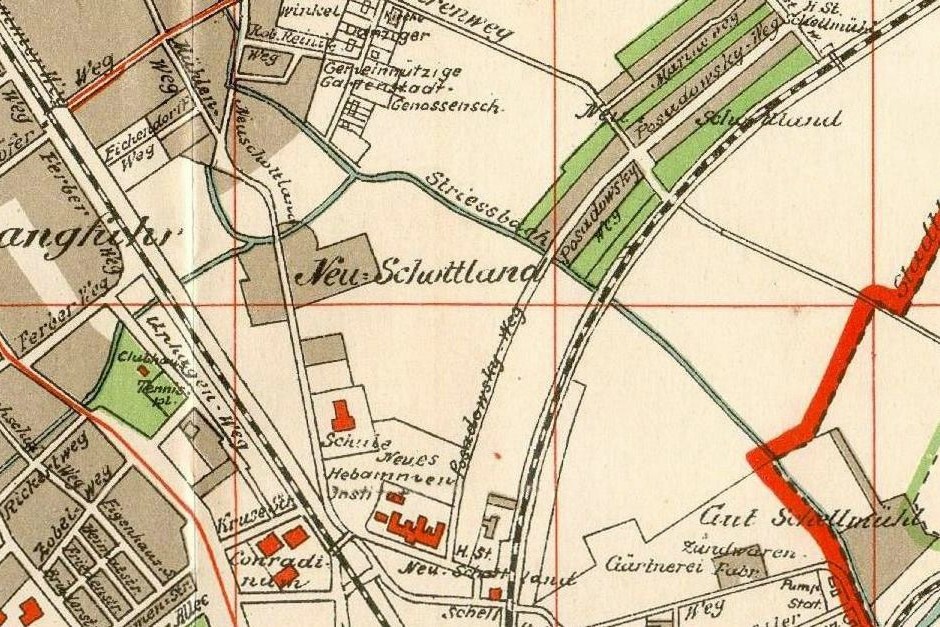
Although the first Scottish travellers came to the thriving port of Gdańsk (Danzig) in the Middle Ages, it was the period from the mid-sixteenth to the end of the seventeenth century that saw the biggest influx of Scottish visitors. Renowned for its  multiculturalism and religious tolerance, the city attracted many groups of Scots, from mercenary soldiers, through scholars, artists and craftsmen, to pedlars. Moreover, due to its favourable tax system, Gdańsk was an especially desirable home to those Scottish merchants who traded in hides, wool, coarse cloth, coal and fish. Some of them even became prominent citizens who contributed greatly to the city’s cultural heritage.

Danzig_NeuSchottland_1912

Scots inhabited different parts of Gdańsk and their presence has left significant traces in the city’s topography. Some names connected with Scottish settlements can still be found on the map today. One of them is Nowe Szkoty (Neuschottland, New Scotland) – the name of a district dating back to the second half of the sixteenth century and located not so far from our Institute  at the University of Gdańsk. By calling our website Nowe Szkoty, we seek to both celebrate the historical links between Gdańsk and Scotland and open the way for new connections, research ideas and approaches with regard to the topic of Scottish literature and culture.

You can read more about Scots in Gdańsk in the following sources:

Biegańska, A. “The Learned Scots in Poland (From the Mid-Sixteenth to the Close of the Eighteenth Century).” Canadian Slavonic Papers. 43: 1 (2001): 1-27.

Devine, T. M.  and D. Hesse, eds. Scotland and Poland: Historical Encounters, 1500-2010. Edinburgh: Donald, 2011.

Kay, B. The Scottish World: A Journey into the Scottish Diaspora. Edinburgh: Mainstream, 2006.

nowe szkoty

As well as here (if you read Polish):

http://www.encyklopediagdanska.pl/index.php?title=NOWE_SZKOTY

http://www.encyklopediagdanska.pl/index.php?title=STARE_SZKOTY

http://www.gdansk.pl/turystyka,1387,18247.html

http://www.emito.net/kultura/historia/49381.html