Nowe Szkoty

Gdańsk Scottish Studies Research Group


Leave a comment

Boundless Scotland: Space in Contemporary Scottish Fiction

between.pomiędzy

There is too much contact in the world. Too much intertwined. Maybe it is true that we all depend on one another, that everything in the world depends on everything else – but we also depend on the spaces in between.We need the spaces, because the spaces are where the order lies.

John Burnside

In the collection of essays Boundless Scotland. Space in Contemporary Scottish Fiction we wish to open up new perspectives on Scottish literature and examine how it challenges the traditional demarcations concerning space in all its aspects. We aim to provide an opportunity for a discussion about the ever-changing relationship between space and place, as well as that between time and spatiality. We invite proposals of a theoretical character as well as those concerning a particular author or an individual text. Contributions should concern Scottish literature in the last three decades and may offer various approaches to text analysis. Articles may address the following themes:

  • semiosphere
  • literary space
  • semantic space
  • chronotope
  • spatial language
  • production of space
  • spatial forms
  • inner spaces
  • union/disunion
  • betweenness
  • gaps
  • liminality
  • locality
  • territoriality
  • spatial relationships
  • contested spaces
  • cityscapes
  • borders
  • dwelling places
  • poetics of space
  • regions
  • maps
  • utopian spaces
  • forms of Scotland

Articles of c. 5,000 words should be sent by 1 December 2013 to monika.szuba@ug.edu.pl.

between.pomiędzy is a series of publications produced under the aegis of the Textual Studies Research Group of the University of Gdańsk and BETWEEN.POMIĘDZY. The series contains both themed collections of essays and monographs. Books may be in Polish or in English. Its aim is to make accessible scholarship that addresses important issues in modern and contemporary English-language literature, and also scholarship that deals with substantial theoretical issues that are of interest to specialists in other fields of literary study.

Publications in the “between.pomiędzy” series are particularly focused on form, as conceived in a broad sense, but the series remains open to scholarship that approaches literature in different but complementary ways.

The overall name of the series “between.pomiędzy” indicates its commitment to work that looks at texts on the borders between genres and kinds, between historical periods and movements, and between national and linguistic cultures.

For further information, see: http://www.betweenpomiedzy.pl/

The series includes the following studies:

1. Samuel Beckett. Tradycja-awangarda., ed. Tomasz Wiśniewski (in Polish, 2012);

2. Back to the Beckett Text, ed. Tomasz Wiśniewski (in English, 2012);

3. Poeci współcześni. Poeci przeszłości, ed. Monika Szuba and Tomasz Wiśniewski (in Polish, 2013);

4. Poets of the Past. Poets of the Present, ed. Monika Szuba and Tomasz Wiśniewski (in English, 2013).

Leave a comment

SFEEc Besançon 2013

One of our members, Dr Monika Szuba is going to give a paper at the XIIIth International Conference organised by Société Française d’Études Écossaises (The French Society for Scottish Studies).

The conference will take place from 17 to 19 October 2013 at the University of Besançon.

Conference information

Programme


Leave a comment

CFP: Between.pomiędzy 2014 Conference/Festival

BETWEEN.POMIĘDZY 2014

14-16 May 2014 Sopot/Gdańsk

New Beginnings/Openings in Scottish Literature

Deadline for abstracts: 1 March 2014. Please see the call for papers for details.

The conference will be part of the New Beginnings.Otwarcia international festival of literature and theatre held in Sopot and Gdańsk from 12 to 18 May 2014. This is the fifth annual festival/conference organized by BETWEEN.POMIĘDZY.

For information on previous festivals/conferences, see http://betweenpomiedzy.pl

For further information, contact the organisers at between@ug.edu.pl

Between 2014 CFP ENG


Leave a comment

Project “Translator’s Island”

The project Translator’s Island is an initiative of the Centre for Translation Studies and the Scottish Studies Research Group at the University of Gdańsk. The aim of the project is to translate into Polish the 50 short stories, poems and essays commissioned by the Edinburgh International Book Festival. The pieces gathered in an online collection entitled Elsewhere have been written by prominent writers not only from Scotland but from around the globe. As the title of the series suggests, its main themes revolve around journey, distance, escape and confrontation with the Other. We hope that our project will grant all these works a new life “elsewhere,” namely in Poland – in top-notch translations prepared by undergraduate and postgraduate students and other translation enthusiasts affiliated with the University of Gdańsk. Participation in the project will provide a  fantastic opportunity to tackle the challenges connected with translating first-class literature.

The original texts can be found here:

http://www.edbookfest.co.uk/writers/new-writing

Project concept and coordination:

Marta Crickmar

marta.crickmar@ug.edu.pl

The first electronic volume of Elsewhere translations will be published in December 2013.


Leave a comment >

Why Nowe Szkoty?

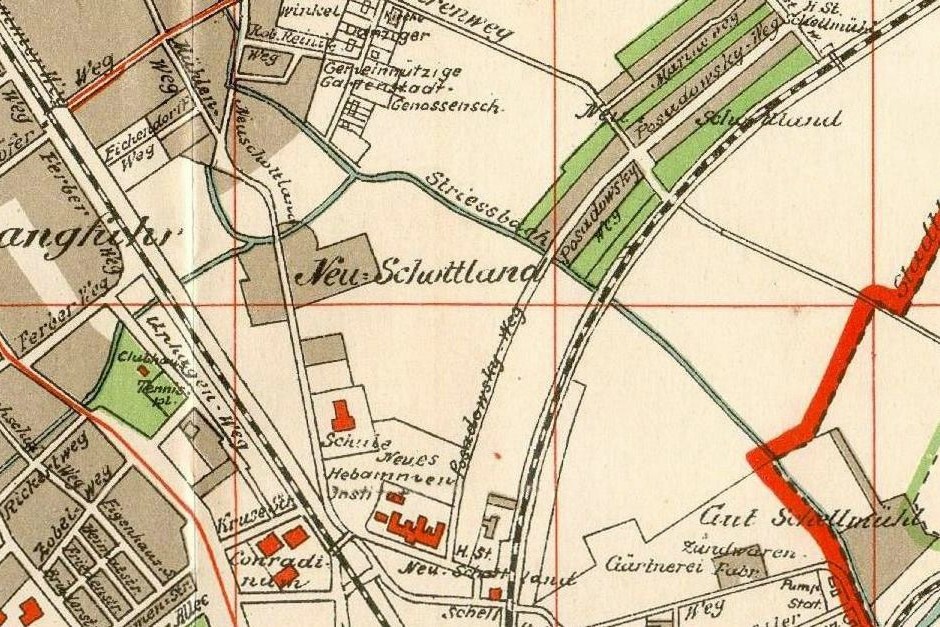
Although the first Scottish travellers came to the thriving port of Gdańsk (Danzig) in the Middle Ages, it was the period from the mid-sixteenth to the end of the seventeenth century that saw the biggest influx of Scottish visitors. Renowned for its  multiculturalism and religious tolerance, the city attracted many groups of Scots, from mercenary soldiers, through scholars, artists and craftsmen, to pedlars. Moreover, due to its favourable tax system, Gdańsk was an especially desirable home to those Scottish merchants who traded in hides, wool, coarse cloth, coal and fish. Some of them even became prominent citizens who contributed greatly to the city’s cultural heritage.

Danzig_NeuSchottland_1912

Scots inhabited different parts of Gdańsk and their presence has left significant traces in the city’s topography. Some names connected with Scottish settlements can still be found on the map today. One of them is Nowe Szkoty (Neuschottland, New Scotland) – the name of a district dating back to the second half of the sixteenth century and located not so far from our Institute  at the University of Gdańsk. By calling our website Nowe Szkoty, we seek to both celebrate the historical links between Gdańsk and Scotland and open the way for new connections, research ideas and approaches with regard to the topic of Scottish literature and culture.

You can read more about Scots in Gdańsk in the following sources:

Biegańska, A. “The Learned Scots in Poland (From the Mid-Sixteenth to the Close of the Eighteenth Century).” Canadian Slavonic Papers. 43: 1 (2001): 1-27.

Devine, T. M.  and D. Hesse, eds. Scotland and Poland: Historical Encounters, 1500-2010. Edinburgh: Donald, 2011.

Kay, B. The Scottish World: A Journey into the Scottish Diaspora. Edinburgh: Mainstream, 2006.

nowe szkoty

As well as here (if you read Polish):

http://www.encyklopediagdanska.pl/index.php?title=NOWE_SZKOTY

http://www.encyklopediagdanska.pl/index.php?title=STARE_SZKOTY

http://www.gdansk.pl/turystyka,1387,18247.html

http://www.emito.net/kultura/historia/49381.html