Call for Papers:
C21 Literature Special Issue 2016
Twenty-first Century Scottish Fiction
The journal calls for articles examining all aspects of post-millennial Scottish literature. Articles may address but are not limited to:
We’re happy to announce that together with the Society for Scottish Studies in Europe we are organising a conference “Place and Space in Scottish Literature and Culture” which is going to take place 8-10 October 2015 at the University of Gdańsk.
See our call for papers
The Association for Scottish Literary Studies Annual Conferences, alternating one-day and longer conferences annually, have always had an international outlook, reflecting the international role of the ASLS in leading the celebration and promotion of Scottish literature. Now the triennial World Congress of Scottish Literature has been launched with the full support of the ASLS, the Association in its worldwide role has resolved to complement the Congresses by ensuring that in the intervening years at least one of its Annual Conference will be the longer format and supported by an international Call for Papers. In Congress years, the annual conference will continue to follow the one-day format. In the light of this and given the welcome success of the World Congress in which the ASLS takes great pride, we are pleased to invite submission of abstracts for papers to be presented at the 2015 ASLS Conference, to be held in Stirling on the weekend of 3-5 July 2015. Non-ASLS members are also welcome to attend and participate.
——————————————————————————————————————-
Themes
The European age of empires is marked by encounter, exchange, conflict and mobility on an unprecedented global scale. ‘Networks of people, goods and capital’ (Magee / Thompson, Empire and Globalisation, 2010) mobilised by empires in the nineteenth and early twentieth centuries enforce a process of globalisation that continues to the present day. However, the expansion of authoritarian empires and capitalist systems across the world is also inextricably linked with the birth and diffusion of revolutionary discourses (in terms of race, nation or social class): the quest for emancipation; political independence; economic equality.
R.B Cunninghame Graham (1852–1936), in both his life and his oeuvre, most effectively represents the complex interaction between imperial and revolutionary discourses in this dramatic period. Writer, journalist, international traveller, adventurer, champion of democratic liberties, left-wing radical and Scottish nationalist (successively president of the Scottish Labour Party and the SNP), Cunninghame Graham was a key literary and political figure during this eventful period in Scottish and global history. His cosmopolitan biography aligns him with contemporary interest in migration, transculturalism and the rise of global citizenship. Of mixed Scottish and Spanish family background, he was bilingual in English and Spanish, lived in Britain, Belgium and Argentina, and travelled in South and North America, Spain and North Africa. His travels and migrations correspond with current interest in Scottish involvements with European imperialisms. At the same time, Cunninghame Graham’s involvement in the Scottish Home Rule movement and the nationalist parties can be seen as part of an ‘anticolonial’ initiative which sets these Scottish political trends in relation to international anticolonial movements in Ireland, India and Africa. His combination of nationalist and socialist sympathies also set an interesting precedent for present-day Scottish politics, where nationalist and left-wing agendas (of varying degrees of radicalism) are likewise often intertwined. As a writer, he is not only interesting for his own work (which includes short stories, travel writing, histories and biographies), but also for his dynamic relationship with (and influence on) other key authors, such as Hugh MacDiarmid, Bernard Shaw or Joseph Conrad.
The highly international dimension of Cunnighame Graham’s life and work makes him an ideal focal point to inaugurate a new initiative within the established series of ASLS conferences, one which is particularly geared to furthering the international dimension of Scottish literary studies.
This 2015 conference aims to promote inter-disciplinary scholarly engagement with Cunnighame Graham and his time, with particular emphasis on issues of globalisation, empire, colonialism and postcolonialism, democracy, civil rights and social justice. We also invite papers on other Scottish writers and intellectuals who engaged with these themes between 1850 and 1950.
As always, the ASLS Annual Conference invites papers from scholars, whether university-based or not, and will be of interest to knowledgeable members of the public as well as academic scholars. The 2015 conference will be co-ordinated by the convenors, Professor Carla Sassi, Chair of the ASLS International Committee, and Dr Silke Stroh, with the support of an organising committee including Professor Alan Riach, Jim Alison, Alan McGillivray, Ronnie Renton, Lorna Smith and Professor Ian Brown.
SUBMISSIONS
We warmly welcome contributions from scholars and PhD students in the fields of Scottish Studies, English Literary Studies, Irish Studies or Postcolonial Studies. We also invite proposals from any other disciplinary backgrounds in the Humanities and Social Sciences.
Abstracts (not longer than 300 words) for 20-minute papers should be submitted by Friday 30 January 2015 by email. Please submit a short biographical note (c. 100 words) along with your abstract. Submissions should be made directly to both conference convenors who will consult with the organising committee before inviting participation.
Prof. Carla Sassi (University of Verona, Italy) carla.sassi@univr.it
Dr. Silke Stroh (Universities of Muenster and Mainz/Germersheim, Germany) silke.stroh@uni-muenster.de
For more information, see:
http://asls.arts.gla.ac.uk/AnnConf2015CFP.html
https://www.facebook.com/pages/ASLS-Annual-Conference-2015/1569854529903420?ref=hl
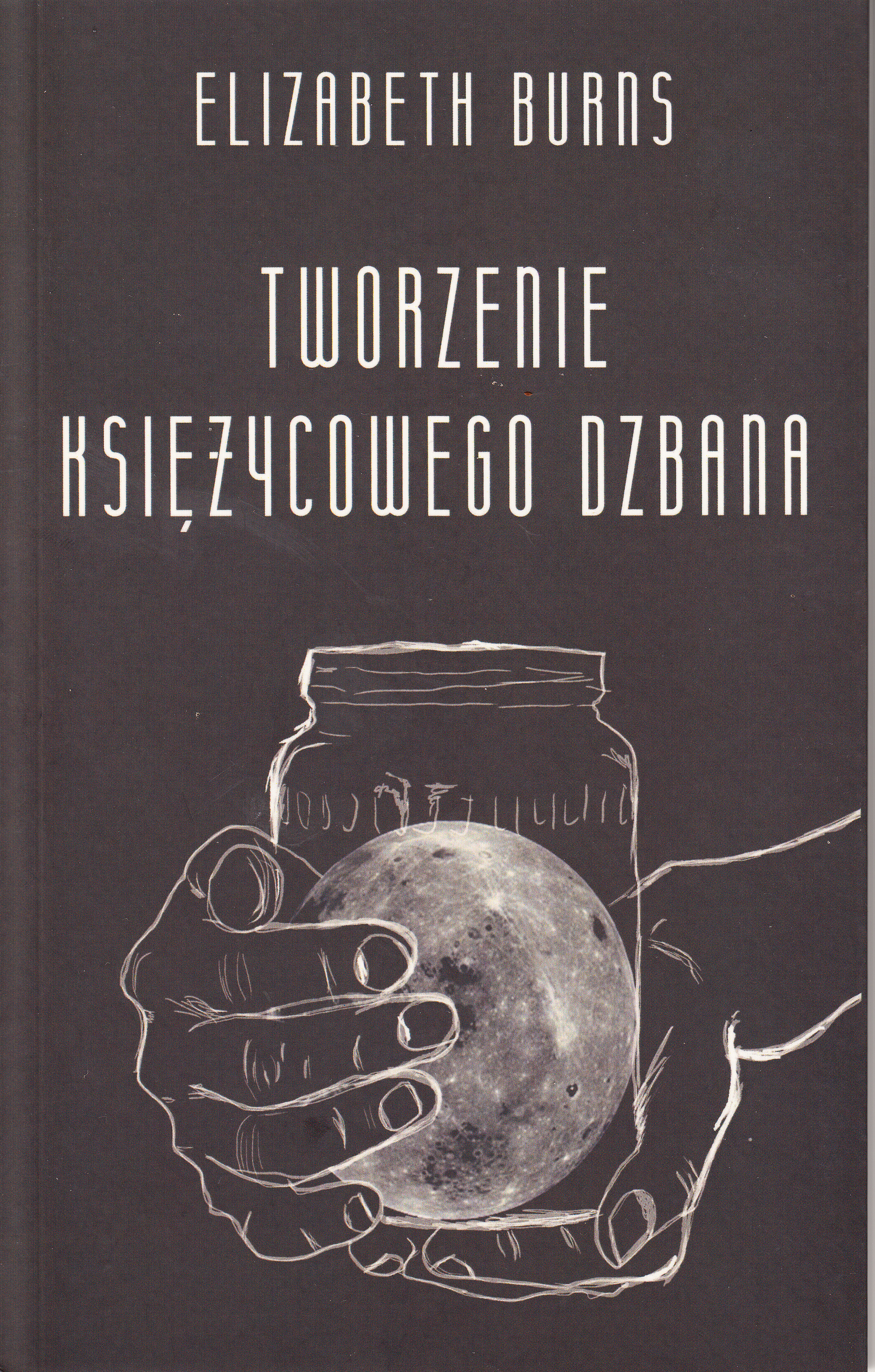
Originally published as Held (Polygon 2010)
Translated into Polish by David Malcolm and Monika Szuba
Szkocka poetka Elizabeth Burns zajmuje się nie tylko “tworzeniem księżycowego dzbana”, ale również budowaniem literackich światów w ogóle. W materialnych, wręcz namacalnych krainach jej poetyckiej wyobraźni znajdziemy postaci najróżniejszego typu (od dwóch sióstr czytających o wojnie, przez garncarza przy pracy, aż po Mozarta u schyłku życia), otoczone zastępami barwnych przedmiotów, wspomnień i elementów krajobrazu. Wizualny wymiar tej poezji jest równie wyraźny jak zaufanie, którym Burns darzy wspomnienia. Oto “migotania pamięci” – “ulotne cudowne kwiecie”.
Jeżeli chcieliby państwo nabyć tomik, prosimy o skontaktowanie się bezpośrednio z wydawnictwem wydawnictwo@wydawnictwomaski.pl
If you would like to purchase a copy, please contact the publisher at wydawnictwo@wydawnictwomaski.pl
Crime Scenes: Modern Crime Fiction in an International Context.
Ed. Urszula Elias and Agnieszka Sienkiewicz-Charlish (Peter Lang, 2014)
Crime Scenes: Modern Crime Fiction in an International Context examines the ways in which crime fiction has developed over several decades and in several national literary traditions. The volume covers a wide spectrum of current interests and topical concerns in the field of crime fiction studies. It introduces twenty-four original essays by an international group of scholars divided among three main sections: «Genres», «Authors and Texts» and «Topics». Issues discussed include genre syncretism, intertextuality, sexuality and gender, nationhood and globalization, postcolonial literature and ethical aspects of crime fiction.
Contents:
David Malcolm, Introduction
PART I: GENRES
Thomas Anessi, “Literary Codes of Conduct in PRL Crime Fiction: Barańczak, Joe Alex and the Powieść Milicyjna.”
Nina Holst, “Way too meta»: Readers, Writers and Transmedia in Castle.“
Nina Muždeka, “A Pothead Detective Challenging the Genre: Thomas Pynchon’s Inherent Vice.”
Elżbieta Perkowska-Gawlik, “The Quest for Identity in Academic Mystery Fiction.”
Agnieszka Sienkiewicz-Charlish, “Tartan Noir: Crime, Scotland and Genre in Ian Rankin’s Rebus Novels.”
PART II: AUTHORS AND TEXTS
Stephen Butler, “Banville, Simenon, Stark – An Existential Ménage à Trois.”
Wolfgang Görtschacher, “Constructions of Identity and Intertextuality in Martha Grimes’s The Black Cat.”
Ayşegül Kesirli Unur, “Cingöz Recai at Work: A Study on Early Turkish Crime Fiction on Film.”
Arkadiusz Misztal, “LSD Investigations: The End of Groovy Times and California Noir in Inherent Vice by Thomas Pyncho.”
Monika Rajtak, “Investigating Evil: Crime Fiction Remodelled in When We Were Orphans by Kazuo Ishiguro.”
Monika Szuba, “Bloody Typical: Genre, Intertextuality, and the Gaze in The Cutting Room by Louise Welsh.”
Jørgen Veisland, “Whose Letter? Possession, Position and Detection in Edgar Allan Poe’s ‘The Purloined Letter’.”
Jadwiga Węgrodzka: The Detective as Reader: Narration and Interpretation in Arthur Conan Doyle’s Detective Stories
Marta Aleksandrowicz-Wojtyna, “Crime Fiction in South Africa? Nadine Gordimer’s Rendition of Crime in ‘Country Lovers’ and ‘Town Lovers’.”
Bernd-Peter Lange, “South Asian Sleuths: Colonial, Postcolonial, Cosmopolitan.”
PART III: TOPICS
Dorota Babilas, “Her Majesty’s Own Murderer? Queen Victoria and Jack the Ripper in Popular Fiction.”
Rachel Franks, “Gender and Genre: Changes in ‘Women’s Work’ in Australian Crime Fiction.”
Marie Hologa, “‘Snort for Caledonia’ – Drugs, Masculinity and National Identity in Contemporary Scottish Detective Fiction.”
Miriam Loth, “‘…the abyss gazes also into you’ – Guilt and Innocence in British Golden Age Detective Fiction and Contemporary Crime Novels.”
Jacqui Miller, “An American in Europe: US Colonialism in The Talented Mr Ripley and Ripley’s Game.”
Fiona Peters, “The Perverse Charm of the Amoral Serial Killer: Tom Ripley, Dexter Morgan and Seducing the Reader.”
Cyprian Piskurek, “More Than Meets the (Camera) Eye: Detective Fiction in Times of CCTV.”
Marta Usiekniewicz, “The Eating Detective: Food and Masculinity in Robert B. Parker’s Spencer Series.”
Arco van Ieperen, “What’s the Word? Sexism and Political Correctness in the Crime Fiction of Robert B. Parker and Sara Paretsky.”
A short story by Paul D. Brazill – “The Tut.”
“The trick and the beauty of language is that it seems to order the whole universe, misleading us into believing that we live in sight of a rational space, a possible harmony.”
(John Burnside, The Dumb House).
Invited speakers include:
John Burnside
Sebastian Groes (University of Roehampton)
Julian Wolfreys (University of Portsmouth)
Celebrated as both a poet and a novelist, John Burnside is one of Britain’s leading contemporary writers. He is the winner of numerous awards, including the Geoffrey Faber Memorial Prize, the Whitbread Poetry Prize, the Petrarca Preis, the T.S. Eliot Prize, the Forward Poetry Prize, and the James Tait Memorial Prize. This one-day event will be the first symposium dedicated to his work, offering the chance for researchers to discuss and reflect upon Burnside’s writing and its place within contemporary literature more widely. The day will conclude with John giving a public reading and participating in a Q&A.
Papers and panels are invited on all aspects of Burnside’s work, including:
• Being, language, space and place;
• The environment and eco-critical perspectives and approaches;
• Human/non-human relations, life forms and animals;
• Burnside’s use of, and relationship to, the other arts;
• Loss, longing, love, sex and violence;
• Contemporary Scottish and/or British writing;
• Nonfiction writing, memoirs; father-son relations, childhood and adulthood;
• The relationship between Burnside’s poetry, fiction and/or nonfiction writing.
Send 300-word abstracts for papers, along with a brief biographical note, to Ben Davies at the email address below by 28th September 2014. Selected papers from the symposium will be put forward for consideration for a volume on the work of John Burnside as part of Bloomsbury Academic’s Contemporary Critical Perspectives series.
Organiser:
Ben Davies, Centre for Studies in Literature, University of Portsmouth.
Email: Ben.Davies@port.ac.uk
Literature thrives on conflict (the agon) between a protagonist and an antagonist. Political, military and media history pits victors against failures. Art lingers on the fame and infamy of its subject matter in equal measure. But what marks out a hero or a villain? How have hallowed and maligned figures contributed to lingering national myths in Scotland and elsewhere? What is their role in the modern world? Scotland in particular has a long history of hero worship, often wryly so, from Blind Hary’s long and often improbable ballad The Wallace to Hugh McMillan’s playful poem The Spider’s Legend of Robert the Bruce. Scotland has its villains, too. Early modern plays recount in grizzly detail the story of the cannibal and mass murderer “Sawney” Bean. Edinburgh city counsellor and swindler Deacon Brodie influenced Stevenson’s iconic Jekyll and Hyde and a wave of other Gothic tales in the nineteenth and twentieth centuries; the infamous grave-robbers Burke and Hare similarly inspired The Body-Snatcher. And new figures such as Saltire, Scotland’s First Superhero, are being invented today, at a time in which Scotland’s constitutional future lies open to significant change. Some figures blur the line between heroism and villainy. Some have yet to be brought back to public consciousness.
As part of Dundee’s Scottish Heroes & Villains Month this October we invite 20-minute papers that address the broad theme of heroes and villains in a Scottish context for a one-day academic symposium. Topics might include but are not restricted to:
• Ethical, political or social distinctions between heroism and villainy;
• Depictions in text or image of Scottish political, religious or military figures;
• Literary or visual depictions of real-life or fictional heroes or villains;
• The persistence of Scottish heroes and villains in public history or policy making;
• Regional, national or diasporic representations of Scottish heroes or villains.
Abstracts of no more than 250 words, along with your name and any academic affiliation, should be sent by email to Daniel Cook (d.p.cook@dundee.ac.uk) before 15 August. We welcome pre-fabricated panels of no more than three speakers, roundtables involving no more than five speakers, or alternative formats.
Website: http://dundeescottishculture.org
With the referendum for Scottish Independence scheduled for September 2014 and the Cornish having recently been granted minority status, questions about the dis-unity of the ‘United’ Kingdom are prominent in the contemporary debate regarding nationalism and regional identity. Regional Gothic will explore these fractures and the darker imaginings that come from the regions of Britain.
The British regions, ‘imagined communities’ with fragile and threatened identities and boundaries, carry their own dark sides and repressions. The Gothic preoccupation with borders, invasion, contamination and degeneration imbricates quite naturally with the different and shifting meanings that arise from writings from – and about – the scattered margins of British identity. Locality affects the Gothic and Regional Gothic seeks to explore these specificities. Gothic fictions of the regions may originate from within those territories or be imagined from elsewhere. Yet, whether coming from the inside or the outside, conceptions of the regional can powerfully inform ideas of identity and belonging. And, as Ian Duncan has pointed out, whilst this may sometimes be a positive thing, regionalism can also ‘register a wholesale disintegration of the categories of home, origin, community, belonging’.
We are seeking abstracts for chapters that address the concept of regions and the Gothic. Submissions are welcomed that address the historic specificities of regional difference and Gothic traditions, as well as inter-disciplinary studies and contemporary imaginings of the regions and the Gothic.
Topics may include (but are not bound by):
• Welsh/Scottish/Irish Gothic
• Nationalism
• Cornish or Northern Gothic
• Peripheralism
• Gothic of the Islands
• Dark Tourism
• Queer identities in the regions
• Urban Gothic
• Ethnicity and the regions
• Village Gothic
• Gender and regionalism
• Suburban Gothic
Please send 300 word abstracts by 1st December 2014 to William Hughes and Ruth Heholt: w.hughes@bathspa.ac.uk and ruth.heholt@falmouth.ac.uk
Completed essays of approximately 6000 words will be required by September 2015.
Conference programme: BETWEEN.2014 FINAL
Organising committee: Professor David Malcolm, Dr Monika Szuba, Dr Tomasz Wiśniewski.
The conference will take place as part of the BETWEEN.POMIĘDZY international festival of literature and theatre held in Sopot and Gdańsk from 12 to 17 May 2014. This is the fifth annual festival/conference organized by BETWEEN.POMIĘDZY.
For information on previous festivals/conferences, see http://www.betweenpomiedzy.pl
For further information, contact the organisers at between@ug.edu.pl
The 5th international festival of literature and theatre BETWEEN.POMIĘDZY will take place in Sopot and Gdańsk from 12 to 17 May 2014.
The festival is organised by Professor David Malcolm, Dr Monika Szuba and Dr Tomasz Wiśniewski.
The theme of this year’s festival is New Beginnings.Otwarcia
Festival programme: BETWEEN.FESTIVAL PROGRAMME
For information on previous festivals/conferences, see http://www.betweenpomiedzy.pl
For further information about the festival, contact the organisers at between@ug.edu.pl