Nowe Szkoty

Gdańsk Scottish Studies Research Group


Leave a comment

A visit to the Opera – Alan Spence’s “Un Bel Di”

In celebration of the new foyers at the Theatre Royal, Scottish Opera commissioned 12 writers to each create a poem.

We are happy to learn that one of the contributors is Alan Spence who was a guest at the conference “New Beginnings in Scottish Literature” that took place as part of the BETWEEN.POMIĘDZY international festival of literature and theatre held in Sopot and Gdańsk from 12 to 17 May 2014. It was the fifth annual festival/conference organized by BETWEEN.POMIĘDZY.

Read and listen to Alan’s poem “Un Bel Di (One fine day)” HERE


Leave a comment

CFP: Scotland – migrations and borders (Journal “Etudes écossaises”)

Etudes écossaises no. 19, 2016

“Scotland – migrations and borders”

The 2016 edition of the journal Etudes écossaises will focus on Scottish culture, history and politics through the prism of migrations and borders. Papers in English or French will be welcomed from specialists in all fields of Scottish studies including arts and literature, civilization studies, history, political science, culture and the media.

Migrations and Borders

As a “stateless nation” (McCrone) Scotland has been posited as displaying both an unchallenged validity as a cultural entity and an incomplete political existence. This lack of alignment between the country’s historical, cultural and administrative border with the formal, diplomatic border of a supranational United Kingdom was recently highlighted in the context of the 2014 referendum as the borders of this polity came very close to being redrawn on the basis of a demand in Scotland for self-determination. While the SNP argument relied on a sense of distinctive nationhood to put forward such claims, the party itself strongly advocated a cosmopolitan conception of Scottishness, which opened the vote to legal residents of Scotland whether they be Scottish, English, European or Commonwealth citizens. In the closing days of the campaign, fears concerning the creation of a “literal and figurative” border with England complete with passport controls,[1] or worries about the volatility of RBS and Lloyds banking jobs which were said to be moving to England,[2] became key issues in the debate. Thus migration and borders, which have been key vectors in arguments surrounding cultural authenticity, economic viability and political legitimacy throughout Scottish history, remain vital considerations today.

For the upcoming issue of Etudes écossaises authors are particularly invited to address issues of how questions of uniqueness, difference and hybridity have been informed through instances of migration and border-crossing. While contributors from all specialties are free to explore issues of transplantation and rootedness, cultural fixity and transition, physical movement and imaginative flight, some fruitful areas of exploration will include:

– the importance of borders and migration in the 2014 referendum
– the role of Scottish diaspora communities in forging and reconstructing Scottishness
– the politics of immigration and emigration
– the shifting political borders of a quasi-federal state in light of the 2014 referendum
– the construction of Scottish national identity within the UK
– the socio-economics of exile and return
– cross-border ties and international co-operation
– the significance of a maritime Scotland with links to Europe and beyond
– analyses of linguistic and cultural borders within Scotland
– the symbolism of borders as physical and cultural frontiers

A brief proposal (200-300 words) should be sent by 1st June 2015. Papers (5,000-8,000 words) may be submitted in French or English. The deadline for finished papers is 1st October 2015. Contact : david.leishman@u-grenoble3.fr

The journal Etudes écossaises contributes to the research project of Grenoble 3 – Stendhal University’s Institut des Langues et Cultures d’Europe, des Amériques, d’Afrique, d’Asie et d’Australie (ILCEA4)

[1] UK Home Secretary Theresa May quoted in “Britons ‘would need passport to visit an independent Scotland’”, Telegraph, 10/9/14.
[2] “RBS will leave Scotland if voters back independence”, Guardian, 11/9/14

Prospective contributors will have to abide by the presentation norms of ELLUG


Leave a comment

CFP: The Legacy of James Macpherson and his Ossianic Publications

The Legacy of James Macpherson and his Ossianic Publications

16th January 2015 – 28th February 2015

Talla Nan Ros, King Street, Kingussie PH21 1HP

2015 sees the 250th anniversary of the publication of the first collected edition of James Macpherson’s Works of Ossian. The occasion will be marked by a two-day conference run jointly between the Kingussie Heritage Festival and the University of the Highlands and Islands. The conference will take place in Kingussie, in Macpherson’s native Badenoch, on 18th and 19th April 2015.

Macpherson grew up in nearby Invertromie, and built ‘Balavil’, the Adam-designed mansion near Kingussie. Over the weekend in April we will explore Macpherson’s legacy — from his early poetry and the Ossianic poems to his political involvement both at home and in the Empire. Alongside keynote talks by Dr Howard Gaskill (Edinburgh) and Prof. Calum Colvin (Dundee), the conference will feature an excursion to Balavil and the Highland Folk Museum at Newtonmore, as well as a hands-on workshop exploring first editions of Macpherson’s works.

Proposals for 20-minute papers are sought from new and established scholars on any aspect of Macpherson’s life and works. Topics may include (but are not limited to)

• Macpherson as historian
• Macpherson’s personal life
• Macpherson’s early works, published and unpublished
• Macpherson’s legacy and impact
• Macpherson’s politics and influence in London
• Macpherson’s involvement in Indian affairs
• Macpherson’s patronage and engagement with Highlanders
• Macpherson’s importance as local laird in Badenoch
• The importance of Ossian to Scottish/British/European/World Literature
• Ossian and art/music/culture
• Ossian and Gaelic tradition

Please submit abstracts of 250-300 words for 20-minute papers to Dr Kristin Lindfield-Ott and Dr David Taylor at in13kl@uhi.ac.uk. The deadline for abstracts is 28th February 2015.


Leave a comment

CFP: 1st Lublin Celtic Colloquium

The Department of Celtic Studies at the Institute of English, The John Paul
II Catholic University of Lublin invites submissions for the

1st Lublin Celtic Colloquium
New Trails and Beaten Paths in Celtic Studies
September 17-18, 2015
Lublin, Poland

Confirmed plenary speakers:

Prof. Alan Titley, University College Cork
Prof. Sabine Asmus, University of Szczecin

Papers are invited in any of the following or related areas:

1. Formal analysis of the Celtic languages from a synchronic and diachronic perspective
2. Challenges in the teaching of the Celtic languages
3. The future of the Celtic languages (sociolinguistics, contact linguistics and language planning)
4. Issues of translation (the challenges of translating into and from languages of limited diffusion)
5. Literary perceptions of Celtic traditions
6. The history, literature and culture of the Celtic peoples

Please send an abstract of your paper proposal (200-300 words, including references) to celticcolloquium@gmail.com by 1st March 2015. The
conference language is English. Your name and affiliation should be given in the e-mail message. Notification of acceptance will be given by 1st April
2015.

The conference fee is 300 PLN, and includes materials, coffee breaks and conference dinner. A selection of papers will be published in a post-conference volume.Details concerning payment and accommodation options will be announced in the second circular.

Organising Committee:
Dr hab. Maria Bloch-Trojnar
Dr Robert Looby
Dr Mark Ó Fionnáin
Dr Aleksander Bednarski


Leave a comment

Publication: Alan Riach “Wild Blue”

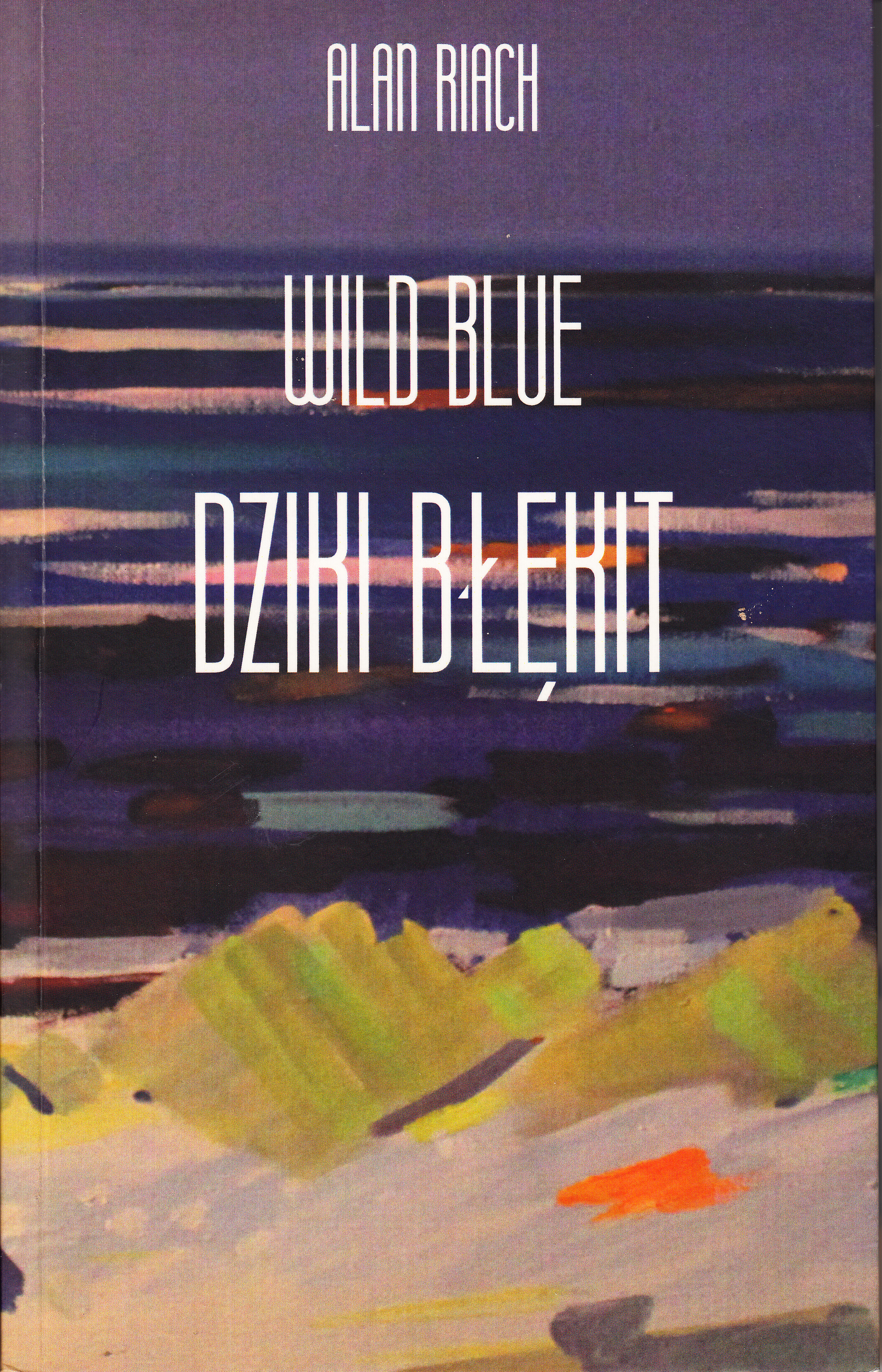
Alan Riach Wild Blue: Selected Poems/Dziki błękit: wiersze wybrane   (Maski, 2014)

Translated into Polish by David Malcolm and Monika Szuba

alan riach Alan Riach’s poems are postcards in different shades of blue: Hamilton in New Zealand, Calcutta, Istanbul, a small town in Portland, Corunna, Dungeness in England. Landscapes are shaped by roads and paths, passages and crossings, over which bridges – present in many poems – create arcs. The poet always returns to Scottish landscapes – Glasgow, Lanarkshire, Drumelzier, the Hebrides and the Orkney Islands – as Scotland is both the end and the start of the road.

Wiersze Alana Riacha są jak pocztówki z podróży w różnych odcieniach błękitu: Hamilton w Nowej Zelandii, Kalkuta, Stambuł, małe miasteczko w Polsce, La Coruna, Dungeness w Anglii. Świat kształtują tu drogi i  ścieżki, przejścia i przejazdy, nad którymi mosty – tak często obecne w wierszach Riacha – zakreślają łuk. Poeta powraca zawsze jednak do rodzimych krajobrazów – Glasgow, Lanarkshire, Drumelzier, Hebrydów czy Orkadów – gdyż Szkocja to koniec i początek drogi.

Monika Szuba

  Jeżeli chcieliby państwo nabyć tomik, prosimy o skontaktowanie się bezpośrednio z wydawnictwem. E-mail: wydawnictwo@wydawnictwomaski.pl If you would like to purchase a copy, please contact the publisher at wydawnictwo@wydawnictwomaski.pl.

Biography

Alan Riach was born in Lanarkshire and took his first degree at the University of Cambridge, where he read English. He then studied for his PhD in the Department of Scottish Literature at Glasgow University. Alan Riach is a poet and from 1986 to 2000 worked in New Zealand at the University of Waikato, where he held the post of Associate Professor of English and Pro-Dean of the Faculty of Arts and Social Sciences. He specialised in 20th Century literature, teaching Scottish, Irish, American and Post-Colonial Literatures and Modern Poetry. In 2001 he returned to Scotland and took up the post of Reader in Scottish Literature at the University of Glasgow.

Riach has contributed to many collections and written other books, including the monograph, Hugh Macdiarmid’s Epic Poetry, which was based on his PhD dissertation and was published in 1991 by Edinburgh University Press. He is also the General Editor of Carcanet’s multi-volume, The Complete MacDiarmid.

Since 2003, Alan Riach has held a Professorship in Scottish Literature and is currently Head of Department. His most recent critical book is Representing Scotland in Literature, Popular Culture and Iconography: The Masks of the Modern Nation (Palgrave Macmillan, 2005) and he has contributed poems and essays to numerous recent volumes, including Scotlands: Poets and the Nation (co-edited with Professor Douglas Gifford, Carcanet, 2004), 121 New Zealand Poets (Godwit Press, 2005), Spirits of the Age: Scottish Self-Portraits (ed. Paul Scott, Saltire Society, 2005), The Wallace Muse (ed. Lesley Duncan and Elspeth King, 2005) and The Edinburgh Book of Twentieth-Century Scottish Poetry (Edinburgh University Press, 2005).

    http://www.youtube.com/watch?v=Q9M0VSVeX-4


Leave a comment

Poetry Podcast: Edwin Morgan, ‘Trio’

broukitbairn's avatarCentre for Scottish Studies

BuchananStreetChristmasLights11Here is the sixth and final episode in our series of Scottish poetry podcasts – enjoy!  All the podcasts are now available on this dedicated page.

  • Edwin Morgan, ‘Trio’

Read ‘Trio’ online (new window)
View notes on the poem

Downloadable file

View original post


Leave a comment

CFP: C21 Literature Special Issue 2016

Call for Papers:

C21 Literature Special Issue 2016

Twenty-first Century Scottish Fiction

With the opening of Scottish Parliament in 1999 and the independence referendum in September 2014, the twenty-first century thus far has been a time of important political change in the Scottish nation. This special issue of C21 Literature asks how the literary landscape of Scotland has evolved over this period, and asks if Scottish fiction can ofer insights into questions around locality, nationhood, and the global in the twenty-first century. Is it possible to speak of a national literature with reference to writing from Scotland? How does such writing inform our thinking in the twenty-first century, within Scotland and beyond?

The journal calls for articles examining all aspects of post-millennial Scottish literature. Articles may address but are not limited to:

• politics and 21st century Scottish fiction
• Scottish history and/ or tradition in the new millennium
• Scottish genre fiction
• literature and the independence referendum
• negotiating the local and the global
• recongurations and dis/continuities in 21st century Scottish literature
• new perspectives on the Scottish canon
• spatiality and/or temporality
• gender and nation in the new millennium

C21 Literature also seeks reviews, features and opinion pieces from academics, readers and writers and conference reports relating to Scottish fiction. Articles should be 6000–7000 words. Reviews and conference reports should be 1000–2000 words. The journal uses the author/date Chicago style referencing system. Full article submission, abstracts only will not be considered. Please send all submissions, questions or enquiries to special issue co-editors Kate Turner and Jane Stedman at c21scotfiction@gmail.com.

Deadline: 1st October 2015


Leave a comment

Conference 2015: Call for Papers announced!

We’re happy to announce that together with the Society for Scottish Studies in Europe we are organising a conference “Place and Space in Scottish Literature and Culture” which is going to take place 8-10 October 2015 at the University of Gdańsk.

See our  call for papers


Leave a comment

CFP: International ASLS conference: EMPIRES AND REVOLUTIONS

International ASLS conference
EMPIRES AND REVOLUTIONS
R.B. CUNNINGHAME GRAHAM AND OTHER SCOTTISH WRITERS ON GLOBALISATION AND DEMOCRACY (c. 1850-1950)
Golden Lion Hotel, Stirling, 3–5 July 2015

– CALL FOR PAPERS –

The Association for Scottish Literary Studies Annual Conferences, alternating one-day and longer conferences annually, have always had an international outlook, reflecting the international role of the ASLS in leading the celebration and promotion of Scottish literature. Now the triennial World Congress of Scottish Literature has been launched with the full support of the ASLS, the Association in its worldwide role has resolved to complement the Congresses by ensuring that in the intervening years at least one of its Annual Conference will be the longer format and supported by an international Call for Papers. In Congress years, the annual conference will continue to follow the one-day format. In the light of this and given the welcome success of the World Congress in which the ASLS takes great pride, we are pleased to invite submission of abstracts for papers to be presented at the 2015 ASLS Conference, to be held in Stirling on the weekend of 3-5 July 2015. Non-ASLS members are also welcome to attend and participate.
——————————————————————————————————————-
Themes

The European age of empires is marked by encounter, exchange, conflict and mobility on an unprecedented global scale. ‘Networks of people, goods and capital’ (Magee / Thompson, Empire and Globalisation, 2010) mobilised by empires in the nineteenth and early twentieth centuries enforce a process of globalisation that continues to the present day. However, the expansion of authoritarian empires and capitalist systems across the world is also inextricably linked with the birth and diffusion of revolutionary discourses (in terms of race, nation or social class): the quest for emancipation; political independence; economic equality.

R.B Cunninghame Graham (1852–1936), in both his life and his oeuvre, most effectively represents the complex interaction between imperial and revolutionary discourses in this dramatic period. Writer, journalist, international traveller, adventurer, champion of democratic liberties, left-wing radical and Scottish nationalist (successively president of the Scottish Labour Party and the SNP), Cunninghame Graham was a key literary and political figure during this eventful period in Scottish and global history. His cosmopolitan biography aligns him with contemporary interest in migration, transculturalism and the rise of global citizenship. Of mixed Scottish and Spanish family background, he was bilingual in English and Spanish, lived in Britain, Belgium and Argentina, and travelled in South and North America, Spain and North Africa. His travels and migrations correspond with current interest in Scottish involvements with European imperialisms. At the same time, Cunninghame Graham’s involvement in the Scottish Home Rule movement and the nationalist parties can be seen as part of an ‘anticolonial’ initiative which sets these Scottish political trends in relation to international anticolonial movements in Ireland, India and Africa. His combination of nationalist and socialist sympathies also set an interesting precedent for present-day Scottish politics, where nationalist and left-wing agendas (of varying degrees of radicalism) are likewise often intertwined. As a writer, he is not only interesting for his own work (which includes short stories, travel writing, histories and biographies), but also for his dynamic relationship with (and influence on) other key authors, such as Hugh MacDiarmid, Bernard Shaw or Joseph Conrad.

The highly international dimension of Cunnighame Graham’s life and work makes him an ideal focal point to inaugurate a new initiative within the established series of ASLS conferences, one which is particularly geared to furthering the international dimension of Scottish literary studies.

This 2015 conference aims to promote inter-disciplinary scholarly engagement with Cunnighame Graham and his time, with particular emphasis on issues of globalisation, empire, colonialism and postcolonialism, democracy, civil rights and social justice. We also invite papers on other Scottish writers and intellectuals who engaged with these themes between 1850 and 1950.

As always, the ASLS Annual Conference invites papers from scholars, whether university-based or not, and will be of interest to knowledgeable members of the public as well as academic scholars. The 2015 conference will be co-ordinated by the convenors, Professor Carla Sassi, Chair of the ASLS International Committee, and Dr Silke Stroh, with the support of an organising committee including Professor Alan Riach, Jim Alison, Alan McGillivray, Ronnie Renton, Lorna Smith and Professor Ian Brown.

SUBMISSIONS

We warmly welcome contributions from scholars and PhD students in the fields of Scottish Studies, English Literary Studies, Irish Studies or Postcolonial Studies. We also invite proposals from any other disciplinary backgrounds in the Humanities and Social Sciences.

Abstracts (not longer than 300 words) for 20-minute papers should be submitted by Friday 30 January 2015 by email. Please submit a short biographical note (c. 100 words) along with your abstract. Submissions should be made directly to both conference convenors who will consult with the organising committee before inviting participation.

Prof. Carla Sassi (University of Verona, Italy) carla.sassi@univr.it
Dr. Silke Stroh (Universities of Muenster and Mainz/Germersheim, Germany) silke.stroh@uni-muenster.de

For more information, see:
http://asls.arts.gla.ac.uk/AnnConf2015CFP.html
https://www.facebook.com/pages/ASLS-Annual-Conference-2015/1569854529903420?ref=hl

Leave a comment

Publication: Elizabeth Burns

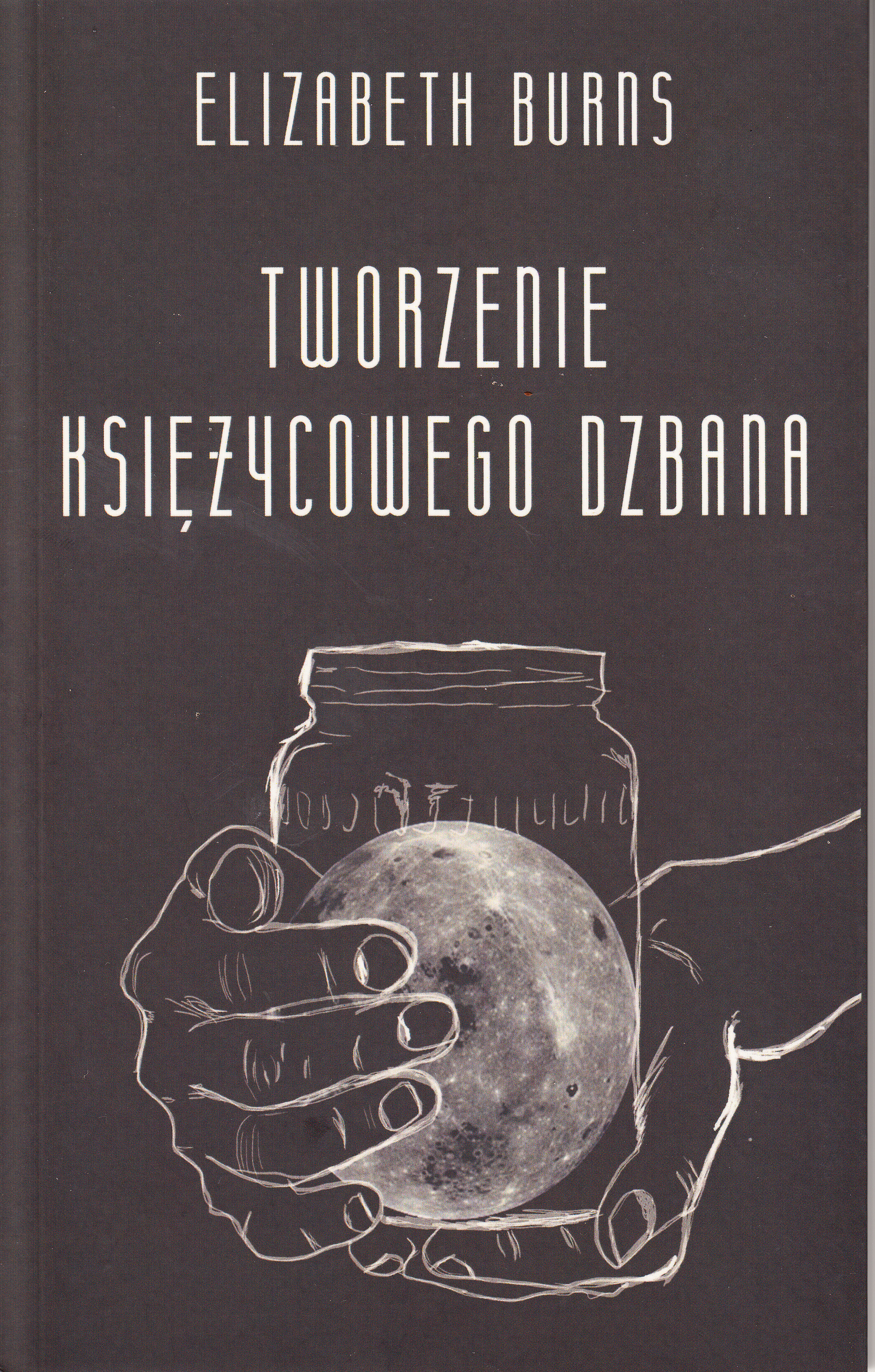
Elizabeth Burns, Tworzenie Księżycowego Dzbana (Maski, 2014)

Originally published as Held (Polygon 2010)

Translated into Polish by David Malcolm and Monika Szuba

Eizabeth burns

Szkocka poetka Elizabeth Burns zajmuje się nie tylko “tworzeniem księżycowego dzbana”, ale również budowaniem literackich światów w ogóle. W materialnych, wręcz namacalnych krainach jej poetyckiej wyobraźni znajdziemy postaci najróżniejszego typu (od dwóch sióstr czytających o wojnie, przez garncarza przy pracy, aż po Mozarta u schyłku życia), otoczone zastępami barwnych przedmiotów, wspomnień i elementów krajobrazu. Wizualny wymiar tej poezji jest równie wyraźny jak zaufanie, którym Burns darzy wspomnienia. Oto “migotania pamięci” – “ulotne cudowne kwiecie”.

Jeżeli chcieliby państwo nabyć tomik, prosimy o skontaktowanie się bezpośrednio z wydawnictwem wydawnictwo@wydawnictwomaski.pl

If you would like to purchase a copy, please contact the publisher at wydawnictwo@wydawnictwomaski.pl